The right pool transforms a backyard into living space. In Dallas, you also need a pool that stands up to heat, clay soil, sudden storms, and hard water. Those realities separate a pretty rendering from a pool that still looks and functions beautifully ten summers from now. As a team that designs and builds high‑end outdoor environments, Elite Outdoor Living has spent years fixing premature failures and collaborating on builds that stay tight, clean, and efficient. This guide distills what we’ve learned working with Dallas pool builders and pool companies across the DFW region, and what discerning homeowners should look for when they want true luxury pools rather than a catalog build with upgrades.
The Dallas context: soil, sun, and swing seasons
If you just moved from the West Coast or Northeast, the ground under a Dallas pool might surprise you. North Texas sits on expansive clay that swells with moisture and shrinks when it dries. Add long heat cycles, erratic freeze events, and spring downpours. A pool shell and deck face movement from below and thermal stress from above. Salt content in the water, calcium hardness, and mineral-heavy fill water add chemical challenges. This is the backdrop. The best Dallas pool contractors design for these known stresses instead of trying to ignore them.
A builder’s approach to soil exploration, structural engineering, and groundwater management matters as much as their tile line. When we help clients choose a builder, we start with questions about geotechnical reports, structural steel schedules, and drainage strategy. A pool that glitters at sunset is easy. One that stays level, resists cracking, and keeps equipment humming through extreme seasons takes real planning.
What luxury means in a pool, not just in pictures
Luxury pools aren’t defined by cost alone. We see luxury show up in three ways: functional performance, integrated design, and stewardship over time.
- Functional performance: Silent hydraulics. Even heating. True laminar weirs on an infinity edge. In-floor cleaning heads that actually keep step treads clear. Automation that works when your Wi‑Fi hiccups. Good luxury feels easy. Integrated design: The pool belongs with the home’s architecture and the Texas light. Step entries line up with sightlines. Outlets hide in stonework. The coping thickness and reveal echo the home’s trim profiles. Materials are chosen for slip resistance, colorfastness, and serviceability, not just a sample board moment. Stewardship: A builder who documents plumbing runs and valve schedules, sets realistic maintenance expectations, and builds in service access. That isn’t flashy, but it saves thousands over the next decade.
When we at Elite Outdoor Living create master plans, we rank builders by how well they hit these three marks. A budget pool can be beautiful on day one, then lose its edge as stains, scale, and sloppy hydraulics accumulate. A luxury pool reads calm and composed because everything behind the scenes is tuned.
Vetting Dallas pool builders without wasting months
Reputation is a starting point, but the DFW market is large and noisy. Here is a tight process that has helped our clients shortlist with confidence.
Shortlist on substance, not ads. Ask each builder for three recent projects within 15 miles of your zip code that match your goals: size, features, and complexity. Visit at least one in person and look at the deck lines, skimmer throats, stone miter joints, grout condition, and equipment pad layout. If the pad looks like spaghetti, the pool will act like spaghetti.
Request the engineering, not just the rendering. For complex soils, a basic engineering letter isn’t enough. Ask for sample structural plans from a comparable build: steel diameter and spacing, beam size, piers if used, shotcrete psi, and wall thickness. Builders who do serious work are comfortable sharing redacted samples.
Probe the hydraulics. Have them show a typical plumbing diagram. Look for large-diameter suction and return lines, looped returns for even circulation, dedicated lines for features, and sweep fittings to reduce head loss. Ask pump horsepower and estimated system head. You don’t need to be an engineer, but their answers should be specific.
Demand a schedule rooted in reality. On average, a custom pool with hardscape in DFW runs 12 to 20 weeks once dig starts, longer if permits, HOA approvals, or supply chain issues drag. Builders who promise four to six weeks for complex luxury pools are setting you up for frustration. We prefer a builder who sets a conservative baseline, then beats it.
Interview their service lead. New pool start-up and first‑year break‑in determine long-term surface health. Talk to the person who will balance the water, set the automation, and train your household, not just the salesperson.
The unglamorous decisions that decide longevity
The markup on glass tile and water features is tempting, but the boring line items make or break a Dallas pool. Here is where money has leverage.
Steel and shotcrete. We specify a minimum 12 inches on center for horizontal and vertical steel in walls, tighter at stress points, with #4 bars common and #5 used where spans or loads warrant it. Shotcrete at 4,000 psi or higher with proper placement and curing. Ask about wet mix versus dry mix gunite, nozzleman certification, and curing time. A rushed cure shows up later as microcracking and efflorescence.
Soil and footings. If expansive clay is active, we like deepened beams and sometimes piers along vanishing edges or heavy walls. Decks over problematic soil should have isolation joints from the pool beam and properly compacted base. If a builder shrugs at soils, keep looking.
Hydraulics and filtration. Oversizing pipe diameter reduces friction and pump noise. We gravitate to 2.5 to 3-inch trunk lines on larger pools and quiet variable-speed pumps. For filtration, large cartridge filters cut backwash waste and keep fine dust out of the pool, which is helpful in a windy spring. If you prefer DE for polish, plan for responsible disposal and more hands-on care.
Surface materials. White plaster is beautiful and classic, yet less forgiving in hard water and heat if chemistry drifts. Quartz and pebble finishes carry higher upfront cost but resist etching and mottling, and they last longer under enthusiastic family use. For tile, porcelain rated for freeze-thaw and glass from reputable makers only. Avoid thin glass mosaics without approved backing systems; we’ve replaced too many that sheared off after one winter.
Decking and coping. Travertine stays cooler on bare feet, but choose denser grades with proven salt resistance if you use a salt chlorination system. Porcelain pavers deliver consistency and require less sealing. For modern lines, poured-in-place concrete with integral color and a light sandblast reads beautifully with Texas architecture. Always specify expansion and control joints with a plan, not as an afterthought.
Lighting. Fewer, brighter LEDs do not equal better ambiance. Plan beam angles so steps, tanning ledges, and deep ends read clearly without glare into the house. Warm white reads more natural than icy blue against limestone and oak.
Automation. Look for systems with local control redundancy. When the internet goes down, you still need to run the spa and lights. Make sure your builder updates firmware and documents programming. Too often we find orphaned logins and mystery schedules.
Salt, chlorine, and water chemistry in North Texas
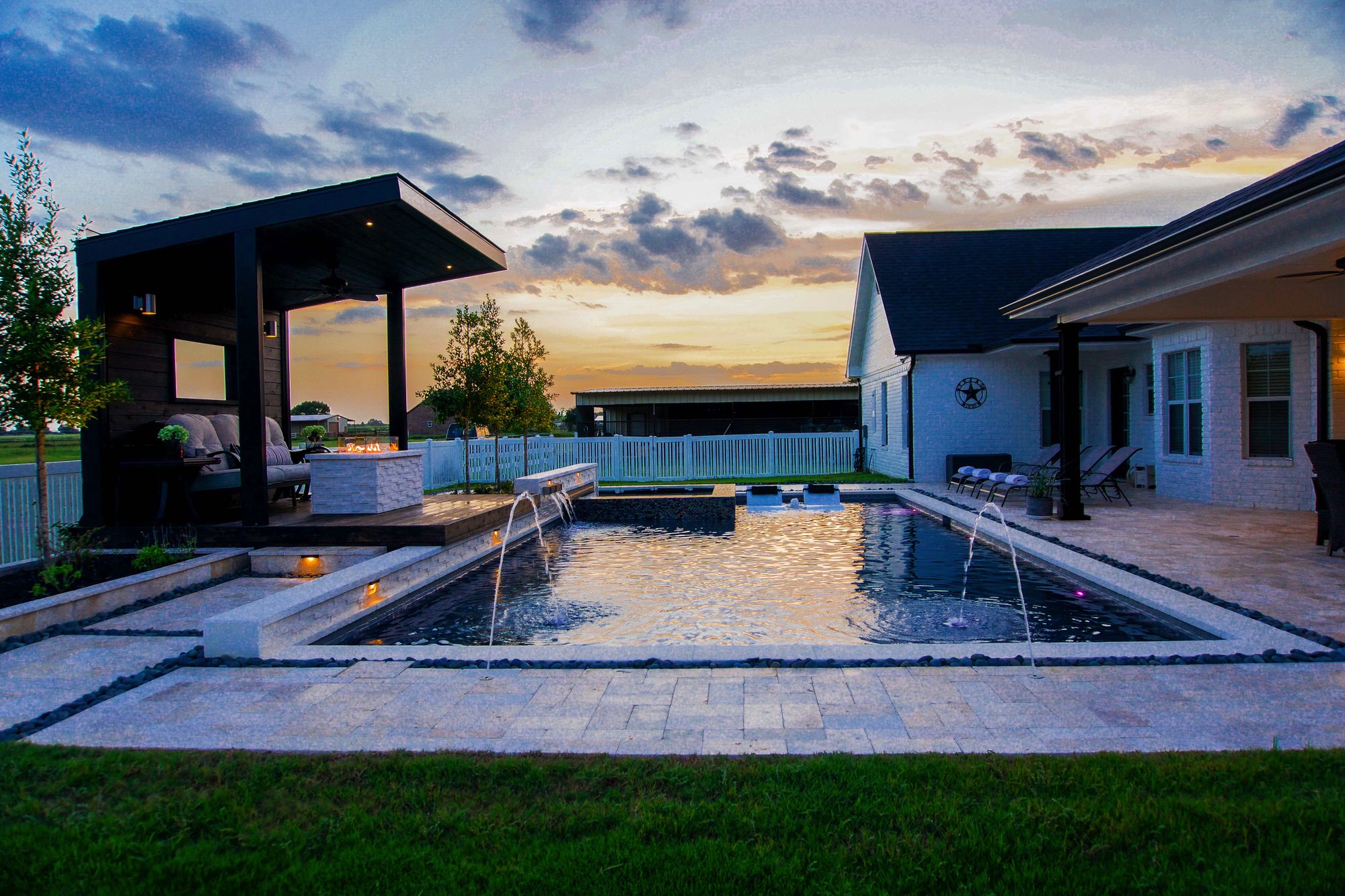
Dallas water tends to be hard. Over time, calcium wants to leave the water and deposit on your tile band, spillways, and spillover spas. Saltwater chlorination is popular for silky feel and convenient sanitation, but it accelerates scaling if the water balance drifts. You can have the benefits of a salt system and keep the tile clean, yet chemistry discipline matters.
We advise these practical habits during the first year. Test weekly, even if you have automation. Keep calcium hardness steady, typically 200 to 400 ppm depending on surface, and monitor the Langelier Saturation Index to avoid etching or scale. Use a quality sequestering agent at startup and seasonally. If you love the look of dark tile and black plaster, realize they showcase scale and mottling. A mid-tone interior with porcelain waterline tile ages more gracefully.
Design that respects the house, the sun, and real life
Many renders look magical from one angle at dusk. Live in the space, and the gaps show up. We design with daily rhythms in mind: where people drop towels, how they carry drinks from the kitchen, what they see from the main living room at 2 p.m. in July.
Entry and steps. A Baja shelf at 8 to 12 inches of water gets used if it’s shaded for part of the day and close to the conversation zone. Step treads should be consistent and visible. We often specify a subtle tile nosing to increase contrast without shouting.
Spa placement. Raised spas work hard aesthetically in Dallas because they break up long lines and can double as seating edges. They also give you a spillway to move water and sound. Keep the overflow width proportional; a paper-thin sheet looks good in renderings and gets ruined by wind and scale. A deeper weir and a robust feed line maintain a coherent sheet.
Shade and glare. West-facing backyards cook in late afternoon. Plan shade with trees, pergolas, or umbrella sleeves built into the deck where they won’t puncture plumbing. Consider how reflected sunlight off the pool surface hits interior spaces. A thoughtful overhang or louver can cut glare without killing the view.
Equipment location. The quietest pool feels luxurious. Keep equipment downslope from living areas if possible and on a pad that drains. We design equipment screens as architectural elements with access doors wide enough for filter service. It seems minor until your technician has to cut out fence posts to replace a heater.
Storage and safety. Towels, toys, and chemicals need homes. An outdoor cabinet within reach of the shallow end keeps clutter off furniture. For safety, removable mesh fencing or integrated glass rails can preserve views, but the placement should still allow a service path and furniture layout.
Cost, value, and where to spend or save
In the DFW market, a custom gunite pool with spa and quality hardscape often lands between 120,000 and 300,000 dollars, with complex features pushing higher. That range shifts with material choices, access constraints, and the scope of outdoor living areas. You can spend money two ways: to create effect, or to buy performance. The best projects balance both.
Spend more on structure and hydraulics, then on surfaces that touch the body and eye daily. Save on novelty features that complicate maintenance. A simple, well-built 38-foot pool with a clean-edge spa, porcelain decking, and refined lighting will feel more luxurious than an over-featured design held together by undersized pumps and thin steel.
If your lot demands retaining, or you want a long vanishing edge, prepare to absorb engineering cost. Do it right once. Retrofitting structure later is brutal and expensive.
How Elite Outdoor Living collaborates with pool builders DFW trusts
We are not a volume pool company, and we don’t pretend to be all things. Our role is master planning and execution for full outdoor environments: pools, kitchens, pavilions, fireplaces, lighting, and landscapes that work as one. In Dallas and the northern suburbs, that often means teaming with specific Dallas pool builders who meet pool builders our standards or leading the pool scope with our own construction team when the design demands tight integration.
The handoffs are clear. We develop the site plan, grading, drainage, and utility strategy. We coordinate structural and MEP around the pool so the pavilion gutter doesn’t dump on the tanning ledge and the kitchen gas line doesn’t cross under the deep end. We set material palettes that work with Texas sun and the home’s architecture. Then we either bring a pool builder into that framework or execute in-house when it benefits schedule and quality.
One example: a Preston Hollow home with a narrow side yard and protected trees required creative access. Instead of forcing large machines and risking root zones, we staged with compact equipment, adjusted beam thickness to account for soil limitations, and sequenced hardscape so the pool shell cured under shade cloth to moderate temperature swings. The spa sat raised 18 inches to provide seating to the adjacent dining terrace, with a weir sized to run quietly at a low pump speed. Years later, the grout lines are tight, the tile is clean, and the owners use it almost every evening from April through October.
Permits, inspections, and neighborhood realities
Dallas and many surrounding municipalities have clear pool permit processes. Plans require setbacks, barriers, entrapment compliance, and often grade and drainage notes. HOAs add another layer with finish palettes and noise restrictions. Good builders navigate this quickly. If your builder shrugs off permits as a formality, be careful. We prefer to over-document: equipment sound ratings, lighting cut sheets to satisfy dark-sky neighbors, and drainage maps that show runoff staying on site or into approved systems.
Inspection timing affects schedule. Electrical bonding and steel inspections must pass before shotcrete. A missed inspection adds days. Keep a communication rhythm with your builder: what passed this week, what’s next, and what could delay the next pour.
Warranty that means something
Most pool companies offer a one-year workmanship warranty, with extended coverage on shells and equipment per manufacturer. Read for exclusions, especially on tile and stone in salt environments, and on freeze damage. Ask how warranty calls are handled and the average response time in peak season. The best Dallas pool contractors track issues openly. We keep a digital record of equipment serial numbers, plumbing diagrams, and water test logs from start-up. When something hiccups, documentation cuts diagnosis time.
Building for maintenance you’ll actually do
We design for households, not manuals. If you travel, a robotic cleaner and a simplified chemistry regimen help. If you love to tinker, automation can be more sophisticated. Either way, ask your builder to:
- Label valve handles and program scenes you’ll use weekly, not every possible combination. Set up remote access and a hardwired local panel, then show you how to use both.
For Dallas wind and dust, larger skimmer throats and leaf canisters on vacuum lines reduce daily cleanup. If your landscape plan includes live oaks or pecans near the pool, choose surface materials and tile that tolerate tannin stains and plan recurring phosphate treatments to keep algae pressure low.
Timeline without the fairy tale
A realistic sequence for a custom pool and integrated outdoor living area in DFW looks like this when access and weather cooperate:
- Design and approvals: 4 to 8 weeks for concept, revisions, HOA, and city permit. Layout and excavation: 1 week, longer with access constraints. Steel, plumbing rough, electrical bond, and inspections: 1 to 2 weeks. Shotcrete/gunite and initial cure: 1 week to shoot, 2 to 4 weeks cure depending on weather and finish type. Tile and coping: 1 to 2 weeks. Decking and drainage: 1 to 3 weeks depending on materials and square footage. Equipment set, plaster/pebble, start-up: 1 week for finish, then 1 to 4 weeks to balance and fine-tune.
Stack in rain delays, material lead times, and the realities of busy crews. If your schedule lands under 14 to 18 weeks total for a full outdoor program, consider it a win.
Working relationship: what great builders do differently
You can feel it in the first site walk. The best Dallas pool builders and pool companies discuss slope, wind, and utilities before talking about fire bowls. They ask about how you entertain, who will swim, and where you store cushions. They talk service access without being prompted, and they say no to ideas that don’t age well on our soil or in our heat.
We like builders who bring a bit of humility. Pools are complicated systems. Something always needs adjustment, especially during the first season. The right partner checks in during the first heat wave and the first cold snap, not just the ribbon cutting.
When to call Elite Outdoor Living
If you want a pool as part of a full outdoor environment, or you have a tricky lot, we can own the entire experience. If you already have a trusted pool contractor and want landscape architecture, kitchens, structures, and lighting designed around the water, we collaborate well and keep the project coherent. Either way, our aim is the same: a Dallas backyard that lives like a resort, holds up under Texas, and feels effortless to own.
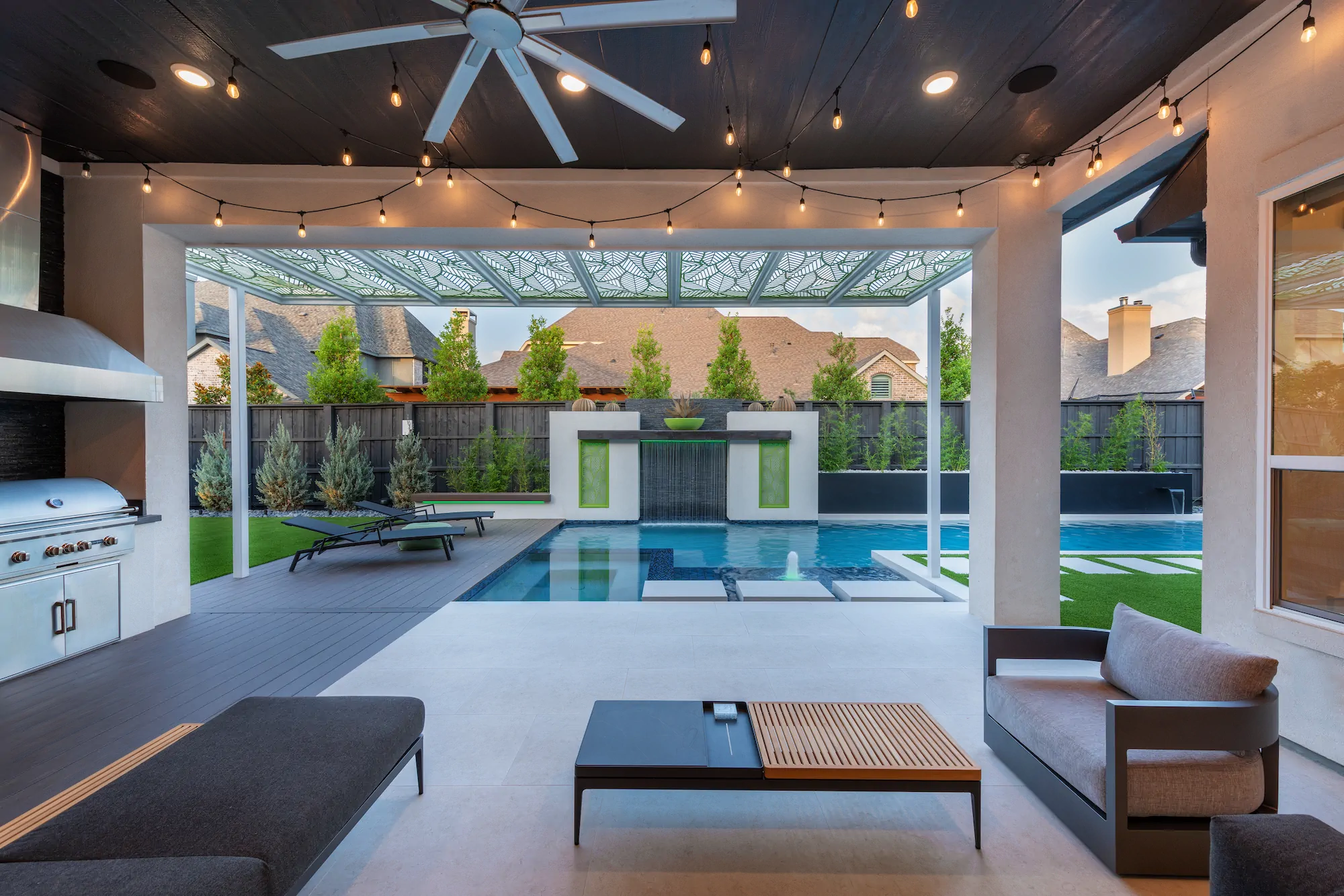
We’ve learned that people rarely regret spending more on structure, hydraulics, and surfaces they touch every day. They often regret chasing novelty features that complicate a simple moment: kids in the water at sunset, a quiet spa after work, the sound of a spillway muting city noise. Choose your builder with those moments in mind. The best pool builders DFW has to offer build for that feeling, and they do it with details you’ll barely notice, which is the point.